Dear Readers,
Welcome back to Off The Fence, a newsletter tearing at the confines of its weekly publication schedule.
We have issued another limited mint of tokens that get you 20% off on any subscription of your choice, whether it's print, digital or the full whammy. Just enter the code ICECREAM20 at checkout while this short resupply lasts.
The issue has been holidaying well. It’s been spotted in good company in Capri, lounging by the pool in Cahors, by the banks of the Rhine in Basel and on the beaches in Gdańsk. In more urban surroundings, it has been seen by a domineering bit of graf in Dublin. Keep sending these lovely snaps in to editorial@the-fence.com to be in with a chance of winning an equally lovely bottle of fizz.
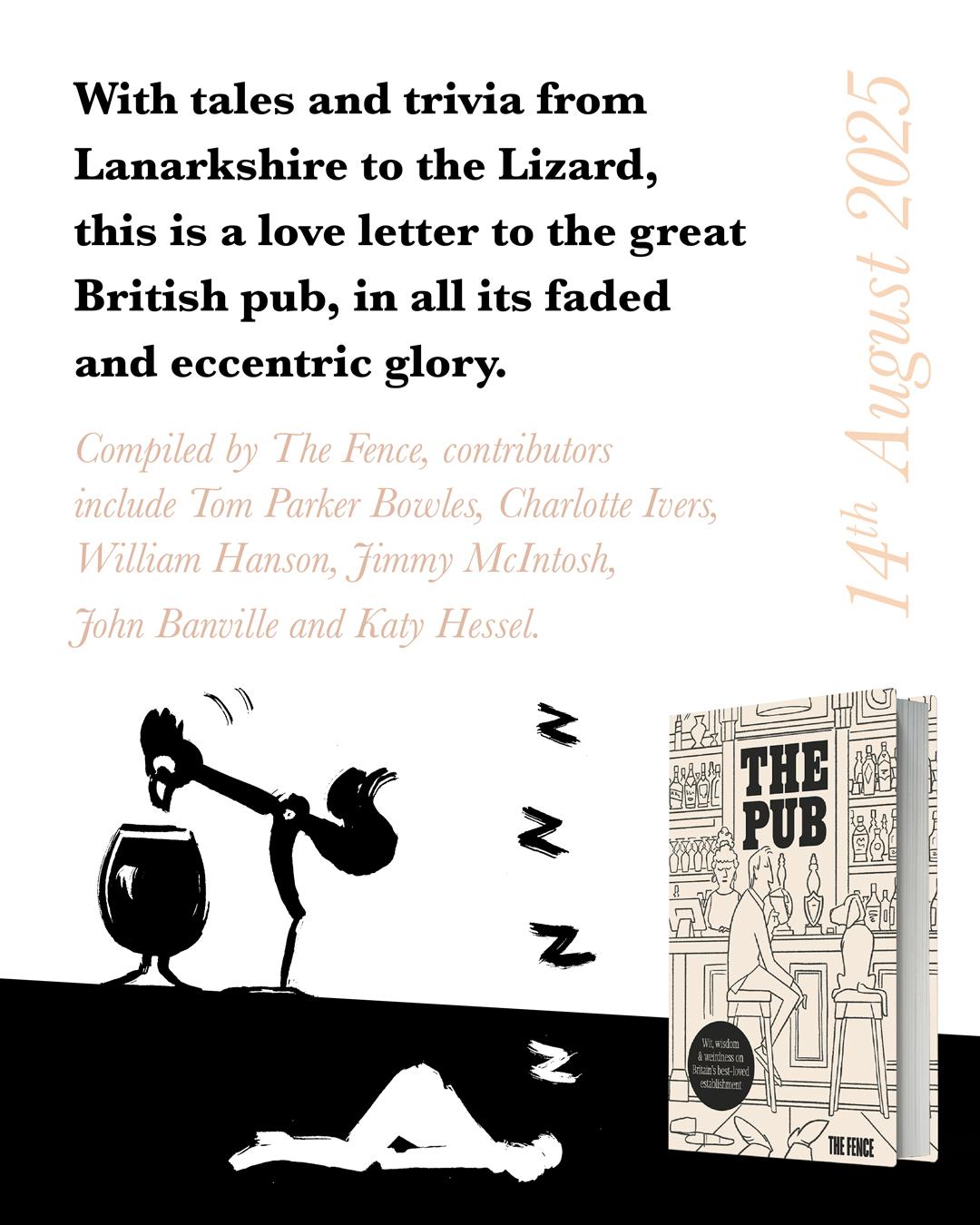
Our book about the pub, helpfully titled The Pub for clarity’s sake, has also been flying off the physical shelves of all good bookshops, and the digital shelves of the online marketplace. We are very proud of it and continue to recommend it to you here.
This week we have right-wingers at the grill, Randy Andy at sea, and praise of Sherlocks passim, so pinch your nose and jump into the waters, first with a medieval penis count from Olivia Jordan.
Hung Like a Horse
What’s in a name? Ask a Bayeux Tapestry enthusiast, and the answer is ‘a lot’.
The first thing they’ll tell you is that the treasured artefact is, in fact, not a tapestry at all, but an embroidery. Tapestries are woven on a loom, whereas the Bayeux was stitched with a needle. But the pedantic semantics don’t stop there.
With news that the Tapestry (the name stuck) is set to return to the UK for the first time in over 900 years, debate over its covert connotations has reignited, between two Bayeux scholars who can’t seem to find any sort of entente, cordiale or not.
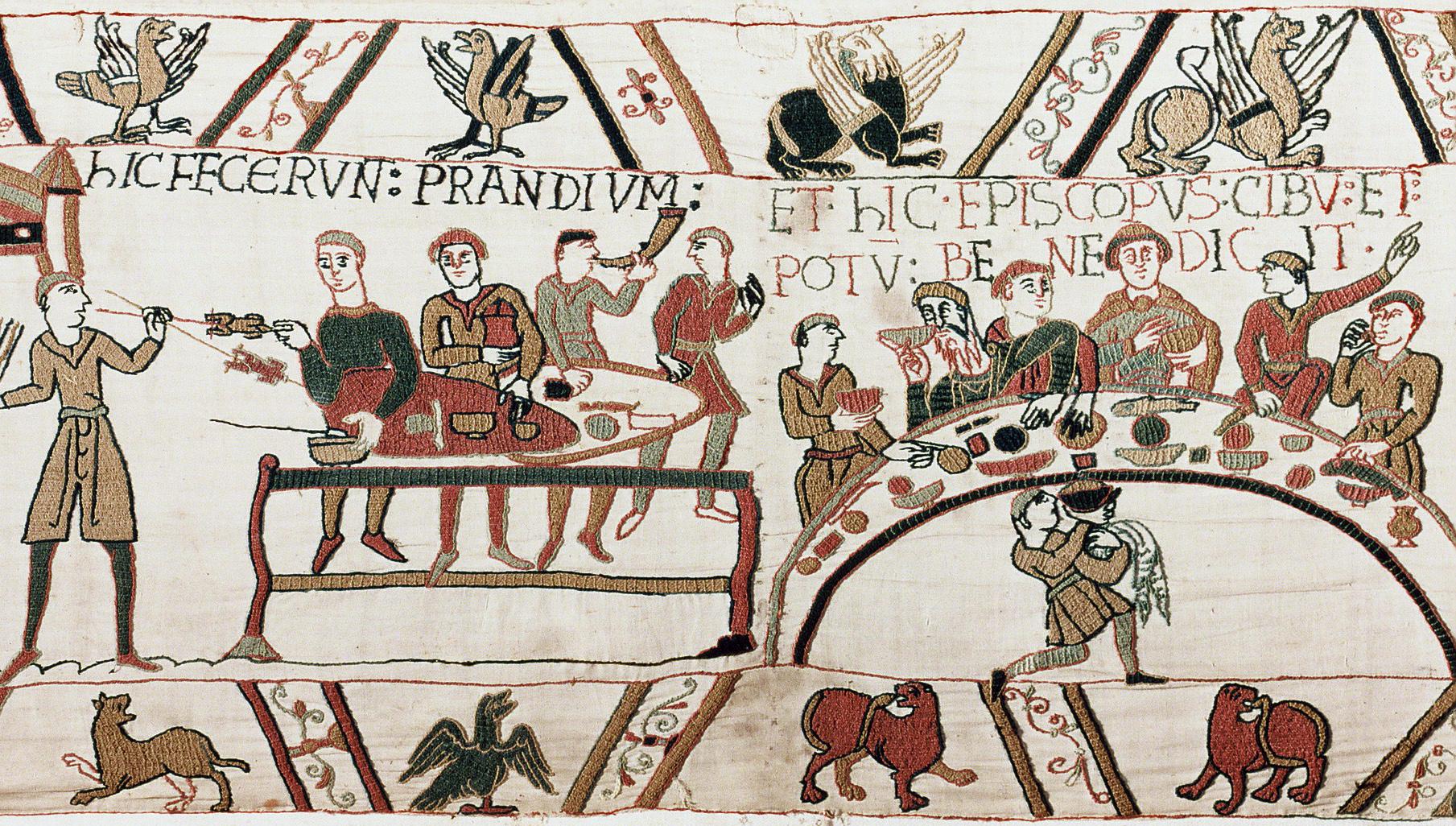
Seven years ago, Oxford professor George Garnett was asked by the BBC to prepare a lecture on the Tapestry. Tasked with finding something novel to say about an artwork so fully examined, he did what any sensible scholar would: he zoomed in on the penises, and started counting.
His census found 93 penises across 70 metres of cloth, a mixture of naked male modesty in the margins, and equine endowments of profoundly exaggerated length. The horse genitals are, quite simply, to illustrate that the Norman cavalry rode stallions; Medieval Maseratis. That’s not to say the priapic boasting was limited to the animal kingdom: the victorious William, Duke of Normandy, is shown particularly well-equipped, for obvious reasons.
But then came the controversy of the alleged 94th. Dr Christopher Monk – the Bayeux specialist styled as the Medieval Monk – insists there is one more penis lurking in the marginalia. Garnett is adamant: no, it is a scabbard: ‘Right at the end is a yellow blob – likely a depiction of brass.’ The debate remains unsettled, its academics locked in permanent war.
But why does it matter? For one thing, it’s this sort of academic quibble – sword or schlong – that can earn an Oxford medievalist a couple extra column inches; the academic equivalent of a pair of size twelves. Garnett says that in four decades of scholarship, this discovery is the only time he’s appeared as a full page in the Sun.
But, he insists, that’s not all. The Tapestry’s parade of penises have long been a point of contention. When a Victorian replica of the Tapestry was made by 35 women from the Leek Embroidery Society in the late 19th century, prudish censorship saw the society remove any depictions of male genitalia – a ruthless castration that Garnett says invariably worsens the final replica. ‘It has none of the vivacity of the original,’ he tuts. Yet it is this denuded version, housed in Reading Museum, that Brits have typically had to put up with.
This is at symbolic cost. Until recently, the borders above and below the main action were thought to be decorative. But scholars have since worked out that the tapestry’s designer laced the borders with sly allusions to Aesop’s fables – in which the genitalia may form part of a symbolic code. It’s all there – sexual deceit, betrayal, shame – told in allegories stitched beneath the battle scenes, providing a second commentary hidden in plain sight.
Where the upper frieze shows Harold swearing an oath to William, the border slips in a naked carpenter sharpening an axe, his tools on full display: the designer suggests deceit and shame obliquely, as Aesop advised, rather than head-on. The tapestry suggests therefore, that at various key points, something suspect and reprehensible was going on. An official story of Norman triumph, undercut by knowing asides to an English public who might have viewed the conquest with rather less enthusiasm.
Which makes its imminent homecoming especially charged. This is not just about art, it’s about curation – and if you’ve ever got chatting to a Goldsmiths grad at an afterparty, you’ll know that curation is politics. Take the National Gallery’s grand rehang this year, which rearranged the collection for its 200th year. The move was greeted with suspicion: whose version of history is being told, and to what end?
For centuries, the tapestry has lived in Bayeux Cathedral and its museum, a French national treasure. From September 2026, it will hang in the British Museum for a year while its French home undergoes renovation. While on paper it is a generous loan, a gesture of cultural diplomacy, less generous observers note that the Bayeux Museum is due to close for a two- year makeover from this September, and London may simply be the safest place to stash it in the meantime.
Others have noted the other political battle behind the Tapestry’s new home: that between former Chancellor, George Osborne, and Labour apparatchik, Tristram Hunt – now chairs of the British Museum and V&A respectively, and who both sought the affections of President Macron to secure the grand display. France’s decision is particularly instructive about the afterlives of our nation’s political grandees.
Still, the symbolism matters. In 1066 the tapestry told of invasion. In 2026 it tells of entanglement: England and France bound together by a millennium of rivalry, empire and alliance. The story is not finished, literally – the ending panel has been lost, so William’s coronation never appears. Instead the cloth trails off mid-scene, as if still waiting to be stitched. The final penis count then? Lost to history.
Olivia Jordan is an arts writer and scriptwriter. You can find her most recent work on BBC Sounds here.
Party and Bullshit, Part Two
Once again the international press has failed to pay heed to this newsletter, and they have got it wrong. As we reported last Tuesday, The Bull pub in Charlbury did not suffer a ‘woke mutiny’ at the hands of its junior staff after JD Vance attempted to dine there.
We heard this rumour early in the week, and it just sounded wrong. Firstly, the pub would have had to be shut down to other customers for the vice-presidential visit, and secondly, it fundamentally misunderstands the actualities of the rural economy for young people. Even in a rich part of the countryside like the Cotswolds, you do not flounce out of a decent job. You don’t want to end up on the night shift at the petrol station.
Anyway, we did do some further digging, and we can confirm that there was extensive back-and-forth between The Bull and Vance’s team – and they ended up doing the now-famous BBQ, at which none other than Thomas Skinner was present. So there you have it.
Hard to Do a Funny Headline for This One
Aharon Haliva is the Israeli general who headed military intelligence on 7 October 2023. He was recently recorded saying that 50 Palestinians must die for every Israeli that day, and ‘it does not matter now if they are children’.
In the last five years, and before he resigned, Haliva gave a number of off-the-record conferences to select groups of British journalists in central London hotels. Will any of the hacks present be tempted to write up the substance of these meetings? Only time will tell.
Homework Sux
For those of you who are either child-bearing or child-adjacent, you might’ve noticed that it was A-Level results day last Thursday. Warm applause to all – and we can only hope that you managed to avoid Jeremy Clarkson’s annual missive on the subject of his results (acquired at Repton, which probably had more bearings on his future than his ‘C and 2 Us’).
Topping the charts once again was Brampton Manor in Newham, a state school now famed for its headline-grabbing, Boris-pleasing pipeline to Oxbridge. Beneath the high-flying stats, however, lies a pedagogical regime that places students and teachers under incalculable pressures, as Francis Martin so intelligently explicated in his bonza long read for us, all the way back in Issue 10.
Martin’s piece is not our only foray into examining the darker side of the education sector. A few years ago, Mark Blacklock wrote the longest piece to appear under our masthead: an investigation into the girls’ school that was purchased and moved onto the property of a paedophile, Queen Ethelburga’s College. And just last issue, we featured a dispatch from Jack Beaumont on his travails inside a beleaguered Special Educational Needs and Disabilities (SEND) school – one of the most arresting pieces we’ve ever published.
Smoke Trees Everyday
Some of you will remember Harriet Rix’s brilliant takedown of Guy Shrubsole’s ‘Lost Rainforest of Britain’ project, which provoked online howls of indignation from George Monbiot and the gang. Just the sort of literary criticism we like to publish.
Anyway, Harriet’s first book, The Genius of Trees, is now out, and it is scoring rave reviews – check this one out in the Guardian. Pretty cool stuff.
The Grand Old Duke of York
Last week, we asked if any of you had ever met the straightforward-shooting Pizza Prince, ‘Randy Andy’. We had a few replies, and this one was our favourite/ the worst. It comes from a fellow sailor who served alongside Andrew many decades ago.
On the last morning of the course, an older cadet officer who had dedicated about 30 years to voluntarily train youngsters in his cadet unit, was sitting at breakfast with me in the ward room. He saw HRH across the room and was in awe - he had never seen anyone famous in real life before.
He tentatively went up to him and asked him a question.
'Sir, Sorry to trouble you but please could I have your autograph, my unit could have an auction for it at Christmas and we could use the money to help pay for equipment for the poorer lads.'
The reply came: 'Autograph! Autograph! I'm not some bloody popstar star you know! How dare you, fuck off! Fuck off now! Fuck off to where you came from!'
In Case You Missed It
The men paying to get their legs medically lengthened in Turkey.
A Canadian Olympic snowboarder’s journey to becoming a major drug lord with a $10 million dollar bounty on his head.
An interaction between 2 Chainz and Tom Lehrer.
Two pieces on literary figures: The work of Yiddish writer Chaim Grade and Jane Gardam’s last interview before her death.
A short biography of the Public Universal Friend, an 18th century non-binary Rhode Island preacher.
A staggering story from Gabriel Pogrund and David Shipley, on the Kentish prison chief with links to organised crime.
And Finally
We are taking a moment to lament that Conan-Doyle’s classic detective – the little-known pulp protagonist, Sherlock Holmes – will likely be associated by generations ‘Zed’ and ‘Alpha’ with Benedict Cumberbatch, and his lumbering take on the character. Spurning the strange, drug-addicted sociopath route, and making him a foppish, quirky Doctor Who analogue, was a true sin. And yet, the BBC series amassed a huge following, to the point that publications like Screen Rant are still publishing rumour articles about the (distant) possibility of a season five.
This success has produced an uptick in Holmes adaptations in recent years, keen on reinventing the wheel – an idiom that was once meant to represent futility, but now forms the basis of commissioning policy across all forms of media. Sherlock has been given a daughter, a younger sister (twice) and even made old so that Ian McKellen could play him. On top of this, we are soon to get a Young Sherlock series on Amazon, modelled – we presume – on the success of Young Sheldon.
Amongst all of this noisy and pretty bad content, the definitive edition of the character has become lost. This would be Jeremy Brett’s performance, in a great many television films made for Granada Television between 1984 and 1994. Brett’s version is the full period deal, shot in an old-school TV style: slow, romantic and slightly OTT.
This does bring with it some caveats for the modern viewer. You may well come across a good few stereotypes in this version. There are women prone to fainting, heaps of orientalism and an almost farcical episode where the killer is a rich aristocrat's Spanish wife, whose passionate Hispanic disposition is so intense that she simply must murder her spouse in a flourish of Latin rage. But if you pick your way around these dated and distasteful morsels, you get a truly brilliant performance as your reward. Take this wonderful short monologue as a taster to get you started.
https://www.youtube.com/watch?v=dPTKl5H5ftg
What made Brett so great (aside from his delightful real last name, Huggins) was his devotion to the role, taking a complete copy of the canon everywhere on set, as well as battling the screen adapters constantly if their stories strayed too far from the original tributary. On one such occasion, he got so furious with the script supervisor that he flipped their dinner table over, knocking a whole dover sole into his adversary’s lap. It is hard to conceive of old Benny Boy doing the same.
His performance also deserves remembrance for the amount of energy he put into it. Brett suffered from bipolar disorder and serious heart conditions, to the point where he needed an oxygen mask on set to recover between takes – apparently responding to concerned colleagues with cut-glass camp, ‘But, darlings, the show must go on’. A favourite of ours is this wonderful argument from The Copper Beeches. If you’re looking for a good watch over the week, we cannot recommend this highly enough.
https://www.youtube.com/watch?v=DYXZr_vz3Y8
Well, that’s all for this week. Remember we’ve got 20 tokens with 20 percent off, and they’ll run out soon. Buy a tote bag or map or a discounted subscription here, and we’ll join you next Tuesday. The average cloud weighs around 500,000kg, or half a megatonne. Speak soon.
All the best,
TF