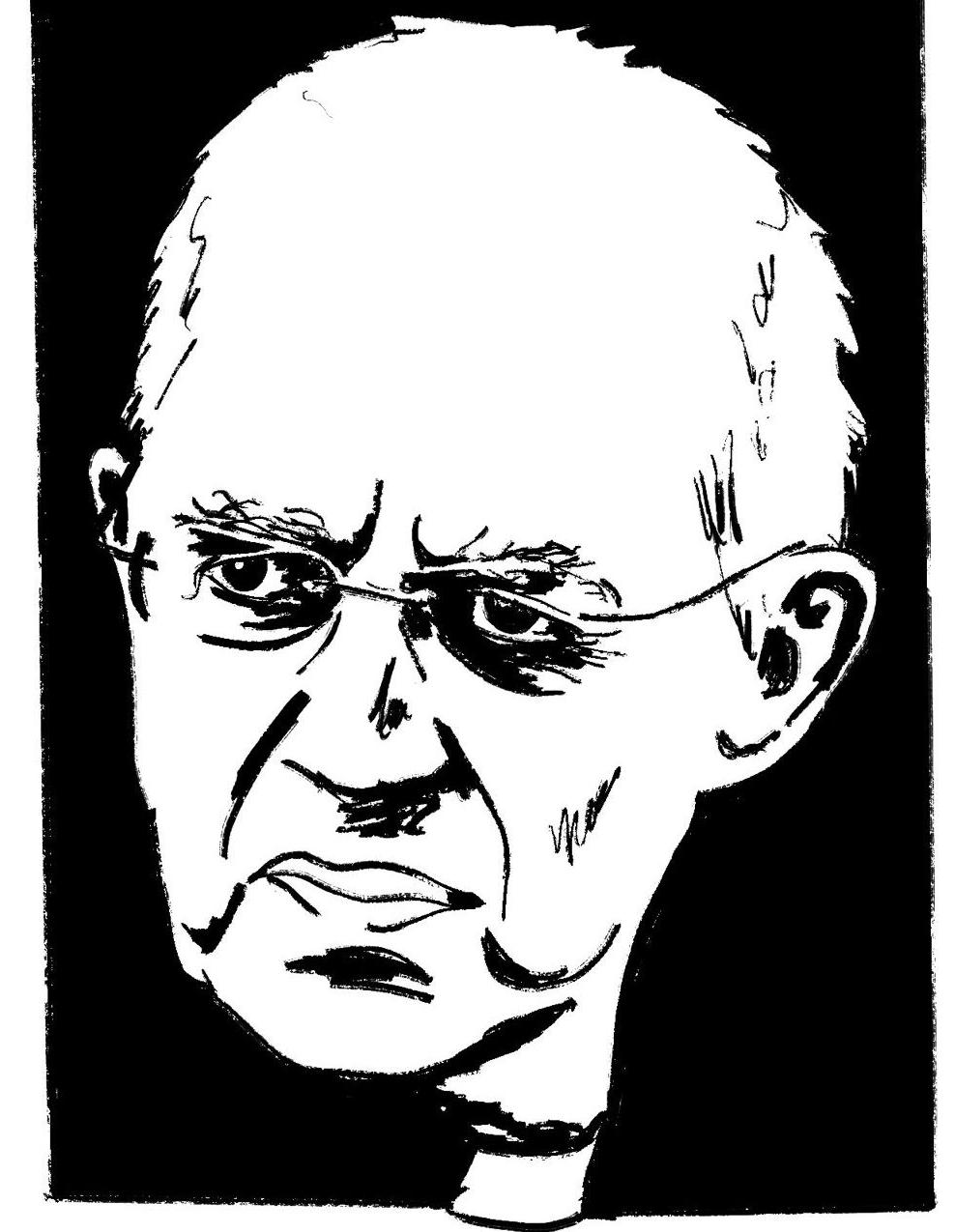
‘WANKER’ is printed in blue biro beneath Pat Buckley’s name in the Maynooth University copy of his memoir, A Thorn in the Side.
This June, he was meant to celebrate his 48th year as a priest. For almost 40 of those years Buckley conducted independent ministry from his oratory in Larne, a port town 20 miles north of Belfast. In 1998, he was consecrated bishop by another religious exile, Bishop Michael Cox, and for this, both men were excommunicated.
Buckley was a bundle of contradictory positions and guises. In his 72 years he led dozens of lives: a socialist; seminarian; chamber pot chucker; Catholic priest; civil rights activist; whistle-blower; ex-priest; independent bishop; News of the World columnist; tabloid phone-tapping victim; performer of sham marriages; defender of immigrants (through said sham marriages); squatter; blogger; community archivist; media darling; bête noire; gay rights activist; HIV activist; memoirist; husband and the scourge, in his own words, ‘of everyone’.
I visited Buckley in Larne toward the end of 2023. He ministered from the same parochial house he was sent to in the 1980s, later coming to share the place with his chef husband, Eduardo. The oratory is one in a line of pretty, grey, pebble-dashed semi-detached houses on Princes Gardens. ‘If you’re going to squat, squat in a good one,’ Buckley told me, handing over a slice of Christmas cake. He was in clerical dress. A large portrait alongside his late mother, Josephine ( ‘Jo-Jo’), taken at his consecration, hung on the wall.
Buckley’s story begins in earnest in 1978, when he was posted to St Peter’s, the cathedral church of the Archdiocese of Down and Connor, just off Belfast’s Lower Falls Road – a parish that suffered some of the worst violence of the Troubles. ‘It was a bit like walking on the moon,’ he said, describing his first moments in his new parish.
Buckley was 26 years old and two years a priest. This was his third diocese. His congregation was drawn from the soon-to-be-infamous Divis Flats housing project opposite the cathedral. The contrast between his own life and that of his parishioners shocked him. A decade old when Buckley arrived, the flats were already a symbol of segregation. Built in a fit of 1960s optimism, the development aimed to rehouse residents from the disintegrating terraces of the Lower Falls. The community was to enter ‘the adventure of high-rise living’ – or so the project was sold by their MP.
The apartments proved to be worse than the traditional terraces. They might have had indoor toilets, but the rooms were tiny and plagued with insufficient heating, poor plumbing and black mould. Rubbish accumulated rapidly, filling an outdoor swimming pool intended for the local children. There was no way out.
By the time of Buckley’s arrival, Divis was synonymous with poverty and paramilitary control. Unemployment was chronic, with Catholics two and a half times less likely to be in work than Protestants. Photographs taken at the time show paramilitaries and British soldiers sheltering between the same blocks of concrete. In one such image, a mural is visible behind a mechanic. Pausing his work on a car, cigarette between his lips, it spells out: ‘IRSP – INLA ROLL OF HONOUR’.