
In her home in Newham, Beth Crivelli and her roommate play host to around 60 pigeons. The birds are everywhere: they are housed in the aviary, a large, purpose-built structure located in the garden; in the pre-aviary, where they flutter about awaiting to be moved; in the shed for sick birds, where they convalesce in cages; and inside, quarantined in a small spare room, too contagious to be among the others. Besides the pigeons, Crivelli has two dogs and multiple cats. On the front door is a sign warning of the detriments of eating meat: animals are her life.
Crivelli is part of a network of rehabbers, mostly self-taught individuals who have learned to care for birds and other small animals. These people do what they do out of love for animals, but also because in this country, there is no government funding for wildlife protection and rehabilitation. There are no ambulances to transport injured animals and the few hospitals that do exist rely on donations from the public. While the Wildlife Protection Act of 1981 covers animals across the United Kingdom, it is rarely enforced when it comes to less desirable creatures, which leaves people to call pest control or other like-minded companies whose policies are often, unfortunately, pro-extermination.
For animal rights activists like Crivelli, any unnecessary animal slaughter, including for food, is unconscionable. The animal rehabber community is small and Crivelli is sometimes sent pigeons from people who look after foxes or waterbirds, but most of the cases she receives come from London Wildlife Protection, a volunteer animal welfare organisation that helps injured, sick and trapped birds. Across the country, networks of pigeon rescuers do what the government does not: they rehabilitate pigeons and release them back into the wild.
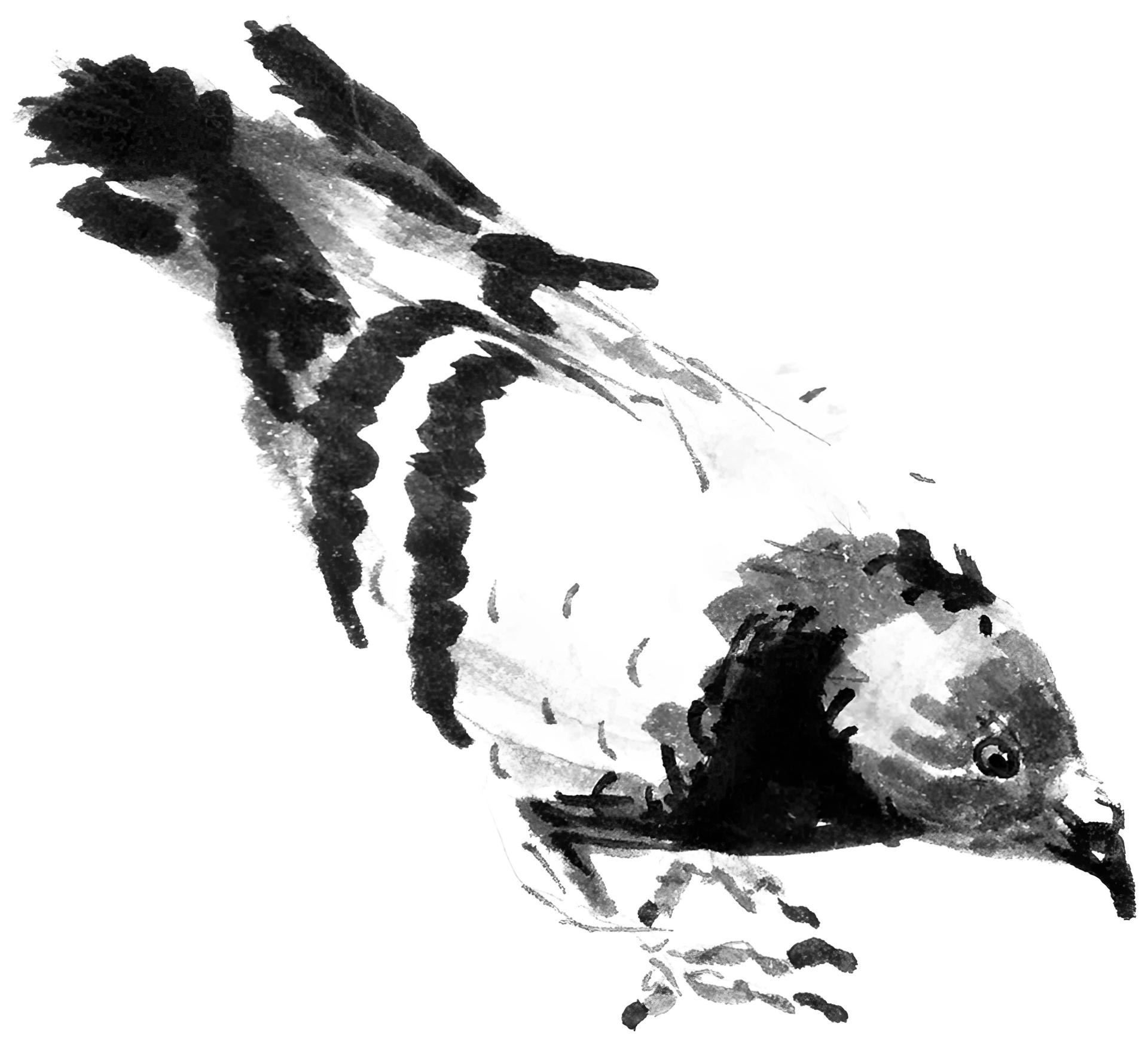
When I visited, Crivelli was rehabilitating a mix of woodpigeons (Columba palumbus), which are large with white patches on their necks and wings, and ferals (Columba livia), the birds we lay-people think of when we think of city pigeons. These have iridescent necks and blue-grey heads and are what congregate in Trafalgar Square, Times Square and atop telephone wires. In the aviary, the woodpigeons and ferals mingle freely but do not partner up. Although both are part of the family Columbidae, these are different birds with different habits.
Inside the sick bird shed, shelves overflow with plastic feeders, bags of seed and tubs of probiotics. Small birdcages house the pigeons too weak to enter the aviary. I met Dalí, named after the painter, who eats for seven and flapped happily in Crivelli’s hands; Orange, who is blind in one eye; and Vince, who is bad at flying. A few were recovering from stringfoot with legs damaged by our discarded waste. Crivelli tries to release all pigeons back into the wild, but there are some, like Vince, who would not survive without human intervention. These birds are sent to long term aviaries for disabled birds like The Orangery Retirement Home for Pigeons, in Scotland. Transporting pigeons is expensive and Crivelli has paid for pigeons to be ubered across London; Vince’s trip to Scotland will most likely be funded through donations.
All birds are quarantined for six weeks when they arrive at Crivelli’s home. Avian pox is no joke – and not something you want ripping through an otherwise healthy community. Contrary to popular opinion, the risk of pigeon-to-human disease transmission is extremely rare. While it is possible to be infected with cryptococcosis, histoplasmosis or psittacosis if you were to inhale pigeon droppings, said droppings would have to be extremely dry to flake into a vapour, and most of us don’t tend to find ourselves nose-deep in pigeon faeces in the first place.
For her part, Crivelli is religious about hygiene and begins each day by cleaning out the pigeons’ environments. She sterilises their cages and feeders and scrapes down all surfaces, a process which takes at least an hour. (Cleaning daily also means the droppings don’t have time to dry out.) While the birds in the aviary can feed themselves and are almost fully recovered, some of the sicker birds need medications, splints and help eating. To get through it all before work, Crivelli wakes up around 5AM, rarely takes a day off and never goes out to dinner.
I first became aware of London Wildlife Protection after a cat attacked a pigeon in the garden of my boyfriend’s house. Afraid that the cat might return, and that we would be left with a bloody carcass, we messaged the RSPCA and LWP, with the latter responding first. We were told via text to pick up the bird, place it in a shoebox and keep it safe indoors. It was, we were informed, a miracle that the pigeon had survived. My boyfriend’s roommate cushioned the shoebox with a dish towel so that the pigeon would be comfortable while we waited the two or so hours. It was evening when a woman in her late twenties arrived, dragging an aggrieved date in tow. Although they offered to return it, we let them keep the dish towel.