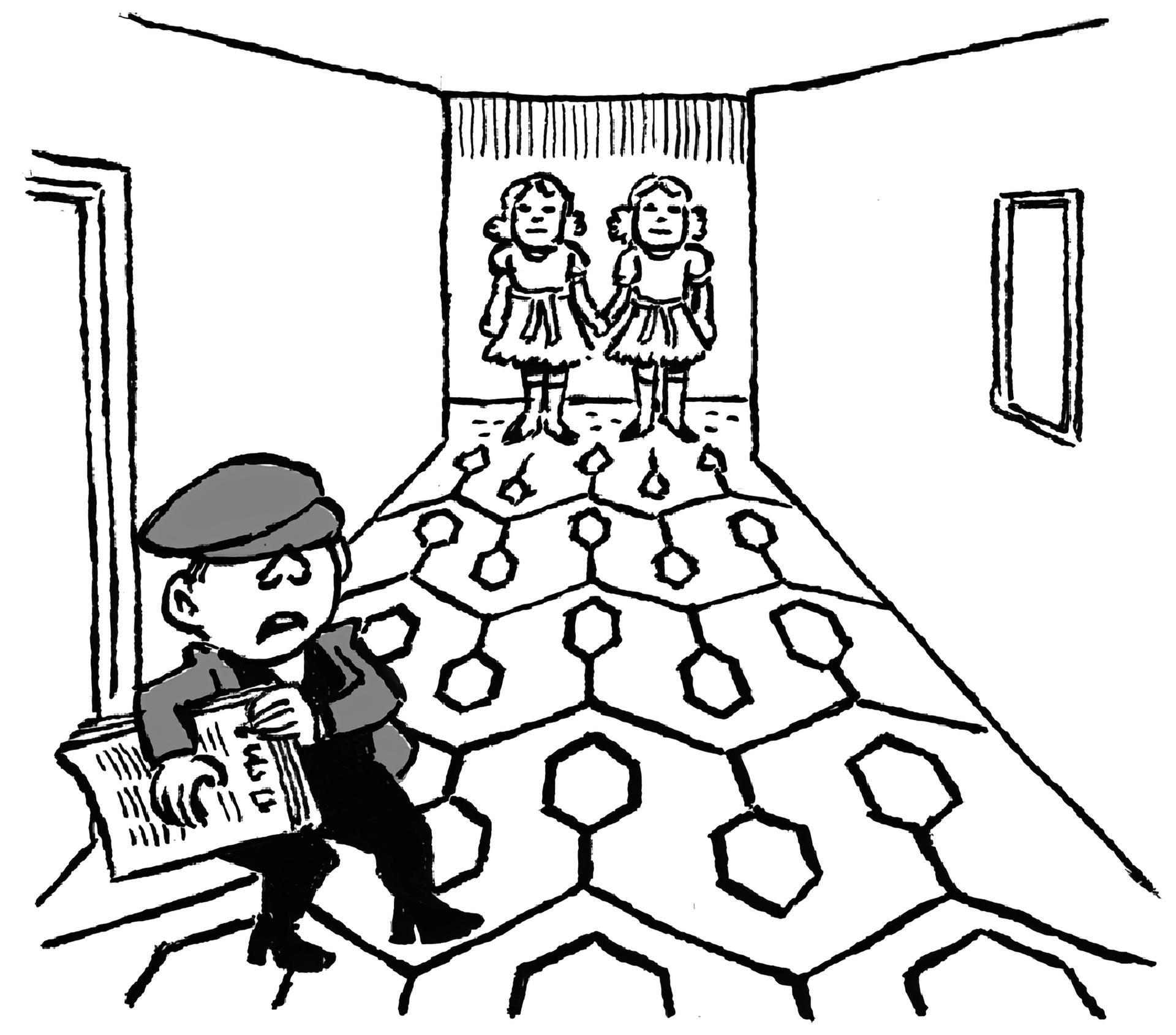
My first ever digs as a property guardian were in an old school near Forest Hill. I lived in what used to be the nurse’s office, with my own ‘en suite’ bathroom (a manky wet room with a ceiling track hoist – an incredibly slow zip-wire-cum-ceiling-monorail used to transport the infirm and very elderly). There was a lingering medicinal smell that no amount of Febreze could ever exorcise. Still, for £435 a month – all bills included – it was a sweet deal, far less than what my friends were paying for cupboards in Dagenham. We used to throw parties in the staff room; there was also a giant papier-mâché dinosaur sat in the reception area. What more could I ask for?
Property guardians are the loose-knit army of residents who ‘occupy’ and ‘protect’ many of the UK’s vacant buildings. The government’s official website states that ‘there is no statutory or official definition of a property guardian’ but here’s my attempt: imagine you’re a real estate mogul who has purchased a dilapidated office block. You plan to convert it into a set of stunning luxury flats, obviously. However, planning permission is a drag, squatters are a pain and 24-hour security costs a bomb. So you subcontract a property guardian firm to take care of the matter. They semi-adapt your building and make it semi-suitable to live in. Then they fill it with ‘guardians’, whose presence will deter those pesky squatters from breaking in. These ‘guardians’ pay a ‘monthly licence fee’ to live in the space, and you take a cut. When the time comes, you can simply take the building back and ‘terminate the licence agreement’ with 28 days notice.
What we might call ‘traditional’ tenancy language is always strenuously avoided, as guardians have swapped normal tenancy rights for cheap rent and a ‘license to occupy’. The word ‘landlord’ is never uttered: the owner of the building is referred to simply as ‘the client’.
After five months in the matron’s office, we were given notice. Next up was a 14-month stint in the dining room of an old boozer in Battersea; I shared the space with some mice and a huge menu board that still adorned the wall: ‘Sausage, Egg, Chips’ was my ‘Live, Laugh, Love’. This was followed by nine months in a former hospice in Brixton with 15 other people, half of whom I never met.
Each time I got settled in my new ‘home’, the dreaded eviction email would pop up in my inbox. I knew a girl who took a space and then received her 28 days notice the same afternoon she moved in. Still, at least she got a month to experience the thrill of living in an abandoned morgue.
If you’re lucky, you can score a long-haul stay – I always recommend picking a council-owned building if you have the chance: as with most public-sector projects, time is not of the essence, so you’re guaranteed to be there for years.
Your guardian unit will always be unfurnished, so I suggest you adhere to an extremely austere interior decor scheme: ‘guardianship minimalism’ – one futon, a single bean bag, one pitiful ‘Home Sweet Former Care Home’ cross-stitch to hang on the wall. I never bothered putting up curtains either. What was the point? Instead, I’d blast the windows with a can of frosted glass spray.
My final and longest sojourn was in a disused nursery in Waterloo, where I had four dusty rooms to myself for £550 a month. (My predecessor had allegedly been kicked out for subletting them, which was strictly forbidden.) Of the places I lived, Waterloo was simultaneously the best and the worst. I had thousands of square feet to bask in, a view of the London Eye and a 20-minute walk to work. Unfortunately, the building also seemed to be cursed.