One morning last month, after dropping my kids at school, I bumped into the local publican in the corner shop. He looked pallid and put-upon, which wasn’t unusual, though he said hello with his usual Geordie bounce, and headed straight for the beer fridge. It was 9am.
He teetered towards the cash register, clasping half a dozen Becks Blues between his fingers. ‘Non-alcoholic beers,’ he said with barely disguised contempt. ‘Apparently it’s the new thing.’ Then, a characteristically morose P– segue: ‘You know, I might have to close. It’s empty, even at weekends. I’m taking £200 a week.’
‘Sorry, P–,’ I muttered, suddenly guilt-ridden. ‘I’ll try and pop in on Thursday.’ Then I stepped out of the shop, heading back up the road. A minute later, I passed P–‘s pub: lights out, a sandwich board outside with the previous day’s football game scrawled in chalk. And the prospect of its closure filled me with melancholy.
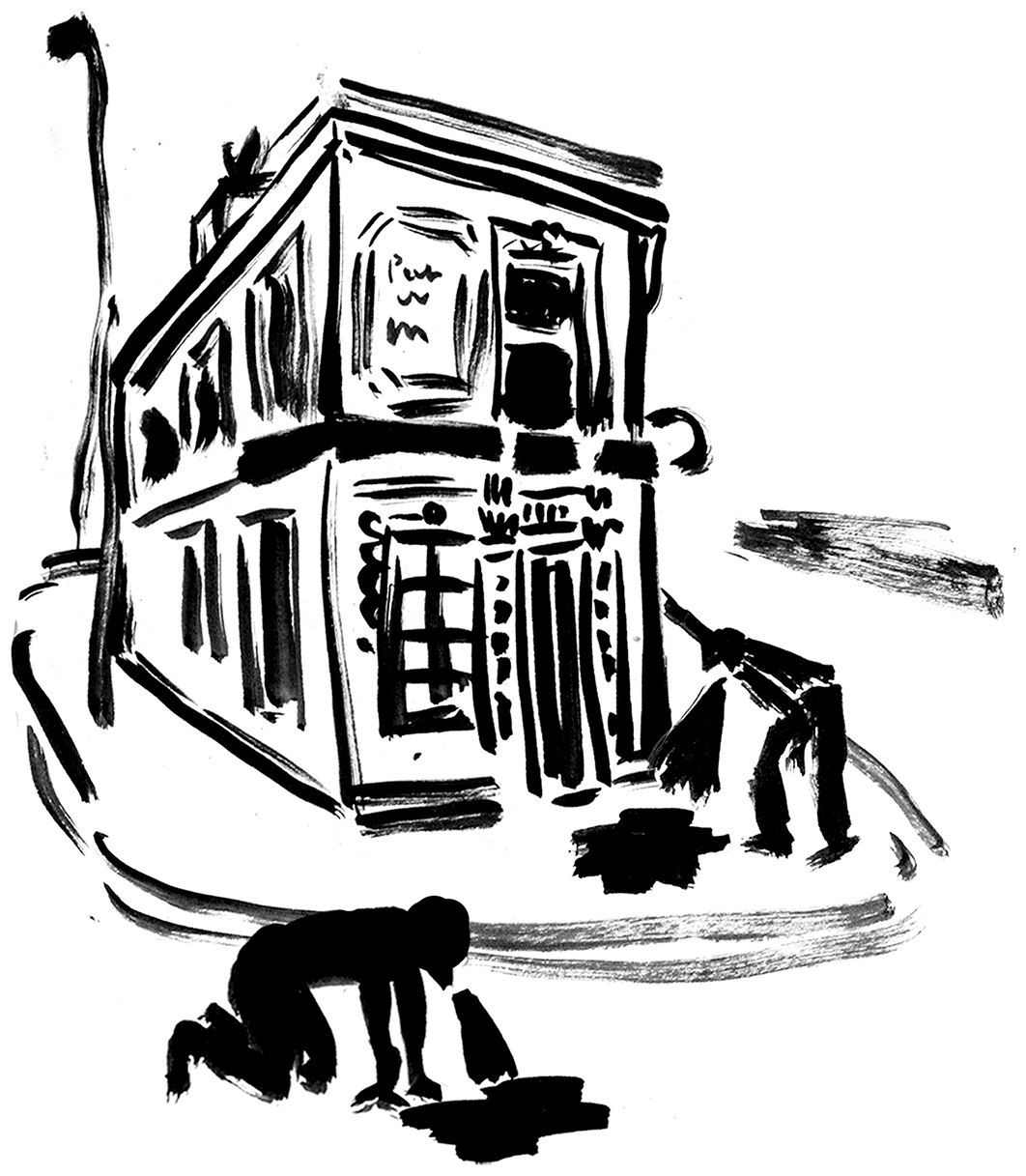
The Bricklayer’s Arms sits at the end of my road. Sandwiched between two council blocks, it is in many ways a rare commodity: a pub in the London backstreets. In decades past, there were a lot of these establishments, designed to serve the immediate neighbourhood as much as any passing trade. But, in my area of south London, as elsewhere, they have long been a diminishing resource. Venture through the residential hinterland of most areas hereabouts and you’ll be able to spot the relics – some opaque wraparound windows, some pearlescent exterior tiling, perhaps even an old signpost – memorialising premises that have long since been shuttered, gutted, and converted into flats.
If you’re of a certain age, and want to picture what this pub is like, you have only to remember the pubscape of the pre-millennium. Most London watering holes were like this once. Pool tables took up a quarter of the square footage. The same old men mouldered in the same velour seats. Kids were tolerated on Sunday so long as they stayed out of the ‘saloon’, whatever that meant. The word ‘gastropub’ hadn’t entered the lexicon. Pubs were strictly for drinking – bar snacks optional – often to the point of oblivion. ‘The Brick’, as its regulars call it, still retains this ambience: a lonely barnacle on a rock that has otherwise been scoured clean.
At one level, the Brick’s obsolescence is a tale of dispassionate market logic. A bevy of economic forces – spiralling alcohol duties and ground rents perhaps chief among them – spelled doom for this model. Between 2008 and 2018, almost a quarter of Britain’s pubs went out of business, with small, neighbourhood boozers most likely to close.
But more often overlooked are the cultural drivers. Though the British public puts away less booze than it did in the 90s, and is more disposed to enjoy a meal while doing so, getting pissed remains a dominant national pastime. That many of us no longer choose to do so in places like the Bricklayer’s is largely a consequence of changing tastes, and the different value we place on notions of community.
However, it also says something poignant about England’s peculiar malaise. The best way to summarize it is in the form of a paradox. The Bricklayer’s Arms is, by almost any aesthetic or epicurean metric, a dreadful pub. But I will be devastated if it should close.