Naming the squeezed middle: 30-year-old men called Nick.
Last year, two things happened to Nick, 30, that meant, for the first time since moving to London, he didn’t need to live in a flatshare. He got a girlfriend, which meant he could halve costs, and his mum unexpectedly passed away, leaving him a small sum of money.
‘I’ve been burning through savings,’ he tells me, ‘and it’s been worth it.’ But now he no longer has to put up with the habits of five strangers. No more arguing with a flatmate who blared out Drexciya sets. No more competing for early-morning bathroom use with the yogi parents of another who, invited to stay for months on end, preferred to meditate in the loo. He laughs now, but the stress of the situation, alongside working a 50-hour week, once led him to be signed off sick.
When I spoke to Nick, he was unaware of his memetic doppelganger.
Popularised on Twitter, the ‘Nick, 30 ans’ meme emerged during France’s 2020 anti-tax movement. A symbol of a disaffected middle class too well-off to receive welfare but squeezed by rising taxes, it paints a grim picture of a broken social contract.
In the meme’s British iteration, Nick is understood to be a Russell Group graduate who moved to London. Arrows symbolise the flow of cash from Nick to two pensioners – Simon and Linda. He foots the bill for their holidays abroad via the extortionate rent he pays them, their triple-locked state pension an added bonus. More controversially, Nick’s taxes are shown to subsidise foreign aid and support a racialised, young, male, welfare recipient, dubbed Karim.
This not-so-young, hard-working Nick is suggested to be a slave to a welfare system that he is unsure will exist by the time he is Simon and Linda’s age.
By 2025, ‘Nick, 30’ had entered the British mainstream as an archetype. His name and plight have been mentioned in Parliament, and there’s a dedicated ‘Nick, 30 ans’ simulator online. When I play, I lose all my housing savings when my landlord increases my rent by £400.
The meme originates from the far right and represents the simplistic view that countless young Brits are doomed because we allow migrants to scrounge off benefits and insist on shelling out foreign aid – its entry into the public consciousness is dangerous. Nevertheless, it reflects a clear sentiment that something has fundamentally gone wrong.

‘The image of this man with his head in his hands, it’s quite compelling,’ says the real Nick, 30. Like a quarter of all graduates, Nick moved to London to pursue work, but ‘they weren’t hiring at the English Literature Factory,’ he jokes.
The graduate premium never appeared in Nick’s pay packet either, despite finding a job in student support services. A master’s in data analytics is, he says, the only way to ‘unstick’ his career and avoid living in a flatshare until he is 60. He’s taken out a £12,000 loan to cover tuition.
The cost of university is missing from the meme, he says. At the most recent budget, Chancellor Rachel Reeves froze the threshold for student loan repayments, yet another development that makes young graduates today the most taxed in history.
He isn’t convinced that his lack of disposable income is due to foreign aid, immigration or welfare spending, but feels ‘it’s easy to get behind feeling like all your money is going to absentee landlords and pensioners.’
He thinks the government should reconsider the triple-lock. ‘Pensioners voted themselves to the top of this little pyramid scheme,’ he explains. ‘They’ve pulled the ladder up behind them. As homeowners, they vote to protect their own assets and refuse to let new housing be built nearby.’
Nick looks back at his vote for Labour with regret. University graduates – and those in their 30s – were some of the groups most likely to have voted Labour in the 2024 general election. ‘At this point, I’m a single-issue voter on housing.’
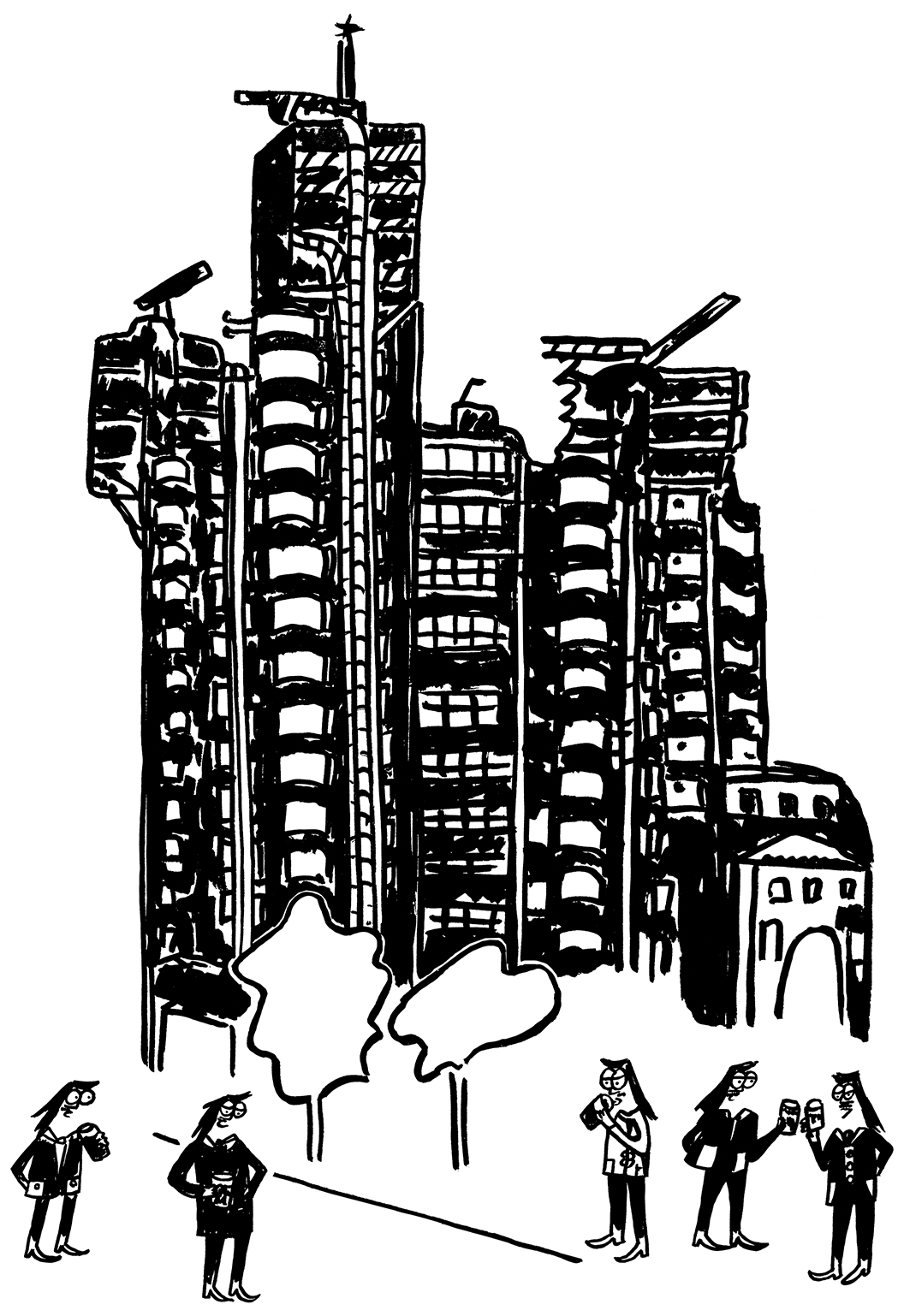
Another Nick, 30, who I speak to works at a prestigious corporate law firm. Despite his high salary, he doesn’t feel particularly well off. ‘I’m in the top 1% of earners,’ he says. ‘But I’m not living like it. I’m not driving a Lamborghini or staying in Mayfair.’ Nick pays two-thirds of his income to rent in Zone 1. He could afford to buy outside of central London, but doesn’t think the commute is feasible. He often clocks in 12-hour days, eating all three meals at his desk, leaving at 2 or 3am.
His mum thinks he needs to get out of the office more, but she doesn’t understand, he says. She was more carefree at his age. ‘She didn’t have financial concerns for the future: how am I going to buy a house or afford to raise children?’
He identifies with the memetic Nick. ‘[Taxation] feels almost personal: at every point they’re trying to get their hand into your pocket.’ Nick’s salary falls into the higher rate of income tax, and if national insurance and student loan repayments are considered, he pays an effective marginal tax rate nearing 60%. ‘It’s almost like hard work is being punitively punished,’ he concludes.
However, not all Nicks are feeling the pinch. The final Nick I speak to does not live in London and did not go to university. This Nick would have started university in 2013, only a year after the coalition government raised tuition fees from just over £3,000 a year to £9,000 a year. ‘That made me think: do I really want to go to university or am I better off finding my own way?’
He opted for an apprenticeship with the civil service instead. This took him first to Manchester, before he settled in Crewe. Three years ago, he bought a townhouse. His mortgage repayments make up only 25% of his outgoings from his over £55,000 paypacket. ‘I miss the convenience of city living, but you get so much more bang for your buck further out.’
When he’s not working, he enjoys yoga and hiking. His friends are trying to get him into golf. A lads’ trip is on the cards this year. He has money left over for savings and, although he’s tipped into the higher income tax band, he doesn’t mind. He’s hopeful he’ll see a return on that investment.
Does he recognise himself in the meme? Not really. For now, he is one of those lucky Nicks with their lives – and not their heads – in their hands.