Dean Street Comedown

Is the Soho grande dame finally on her last legs?

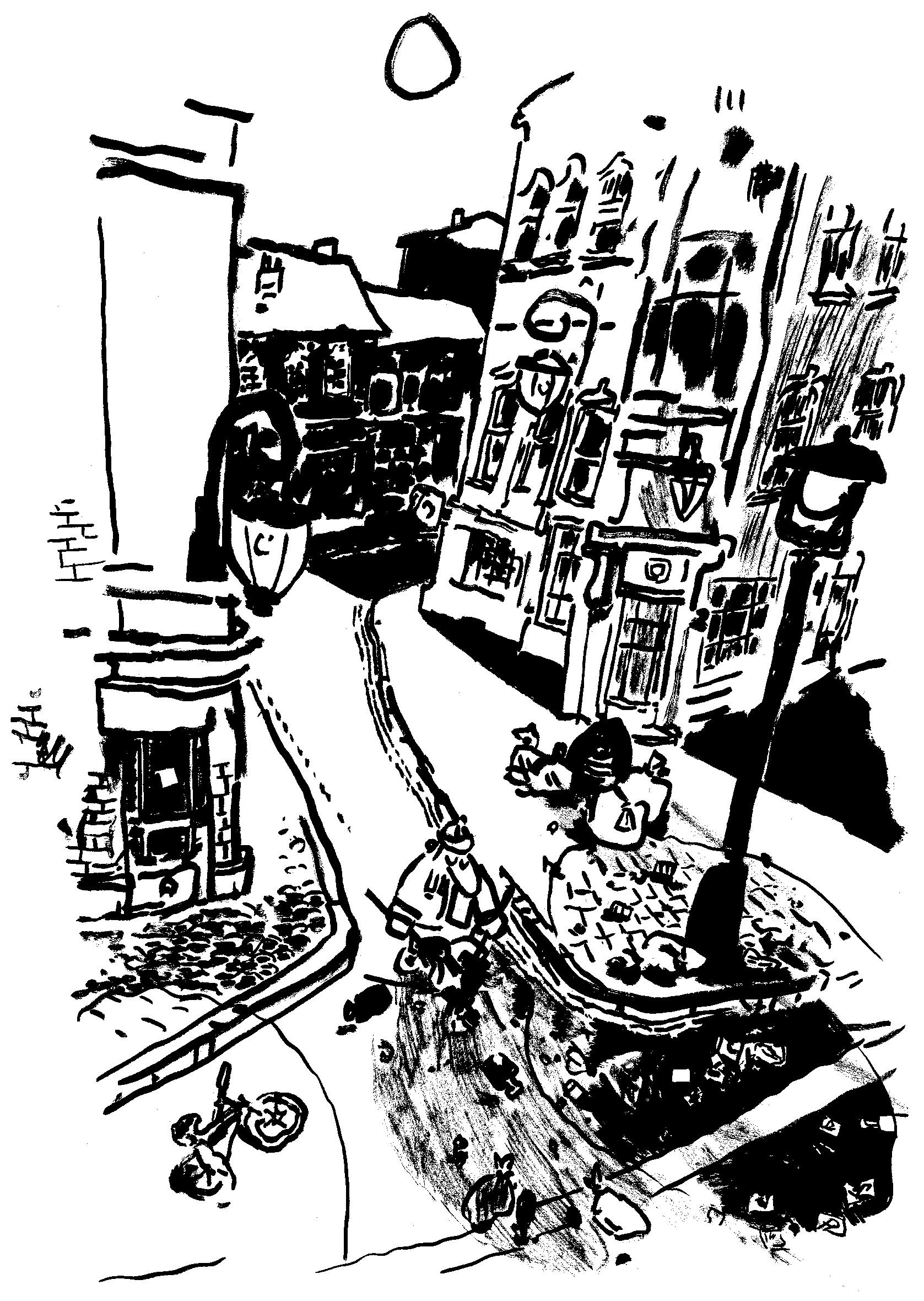
As with anything iconic, The Groucho Club’s death has been foretold nearly as long as it’s been open. But with a revolving door of management, the past two years have seen younger members leaving in droves. Is the Dean Street grand dame finally on her last legs?

Speaking to more than 30 former and current members, and a host of former staff, a buffet trolley of complaints emerge. The astronomical membership fees, ever increasing with each year. The stringent new security measures. The inescapable presence of septuagenarian partyboy Philip Sallon, who can be found leading singalongs by the piano wearing nothing but a nappy. Ludicrous costs abound: a bottle of Champagne is £90 and the club claret is £60. Some former and current members feel the club is being run into the ground by its newish owners, Artfarm, the hospitality wing of the Hauser & Wirth (h&w) empire. Profits are down – the Groucho made a £1 million loss in 2024, according to publicly available accounts – and everyone, it seems, is elsewhere. As Piers Russell-Cobb, a long-standing member, says: ‘There are times when I’ve been in lately when it’s been empty.’

But are the issues more profound than footfall? Has the Groucho committed the ultimate sin, and become uncool? The writer Cosmo Landesman is typically forthright about why he quit his decades-long membership of The Groucho Club. ‘I was in there one night and there was no one I wanted to have sex with or engage in conversation.’

Like any institution – and the Groucho is certainly an institution – a vivid sense of loyalty is apparent among former members and ex-staff. But the Groucho they remember no longer exists.

How did the Groucho fall on hard times? It’s a story of highs and lows that involves the Albanian mafia, a trio of privately educated confectionery heirs, the influence of Stephen Fry, cocaine-addled peers, a cavalcade of legendary staff known by their first name (Aga, Bernie, Mary-Lou, Liam), priceless artworks, and allegations of behaviour that more than a few people hope to see swept under the carpet.


Those green vinyl strips above the door of the Groucho are almost as resonant a visual cliché of Cool Britannia as Geri Halliwell’s Union Jack minidress. But the club’s beginnings predate Damien Hirst, Alex James, et al. Founded in 1985, it was, for its first decade, a club dominated by the publishing and literary set. The American superagent Ed Victor, the imperious Carmen Callil and Bloomsbury honcho Liz Calder, who, as long-time member Fay Maschler tells us, came up with the name.

At the time, London’s private members’ clubs were either squalid Soho drinking clubs, like the Colony Room, where alcoholic writers and artists screamed abuse at each other, or the pompous palaces of St James’s, where veterans of the Battle of the Marne would sip pink gin and pick at roast partridge – clubs where women have been banned since Queen Anne was on the throne.

The publishing posse wanted a club where they, along with people from the worlds of TV, film and journalism, could talk late. Somewhere where women would, unlike at the gravy-splattered club table at The Garrick’s Coffee Room, never be turned away.
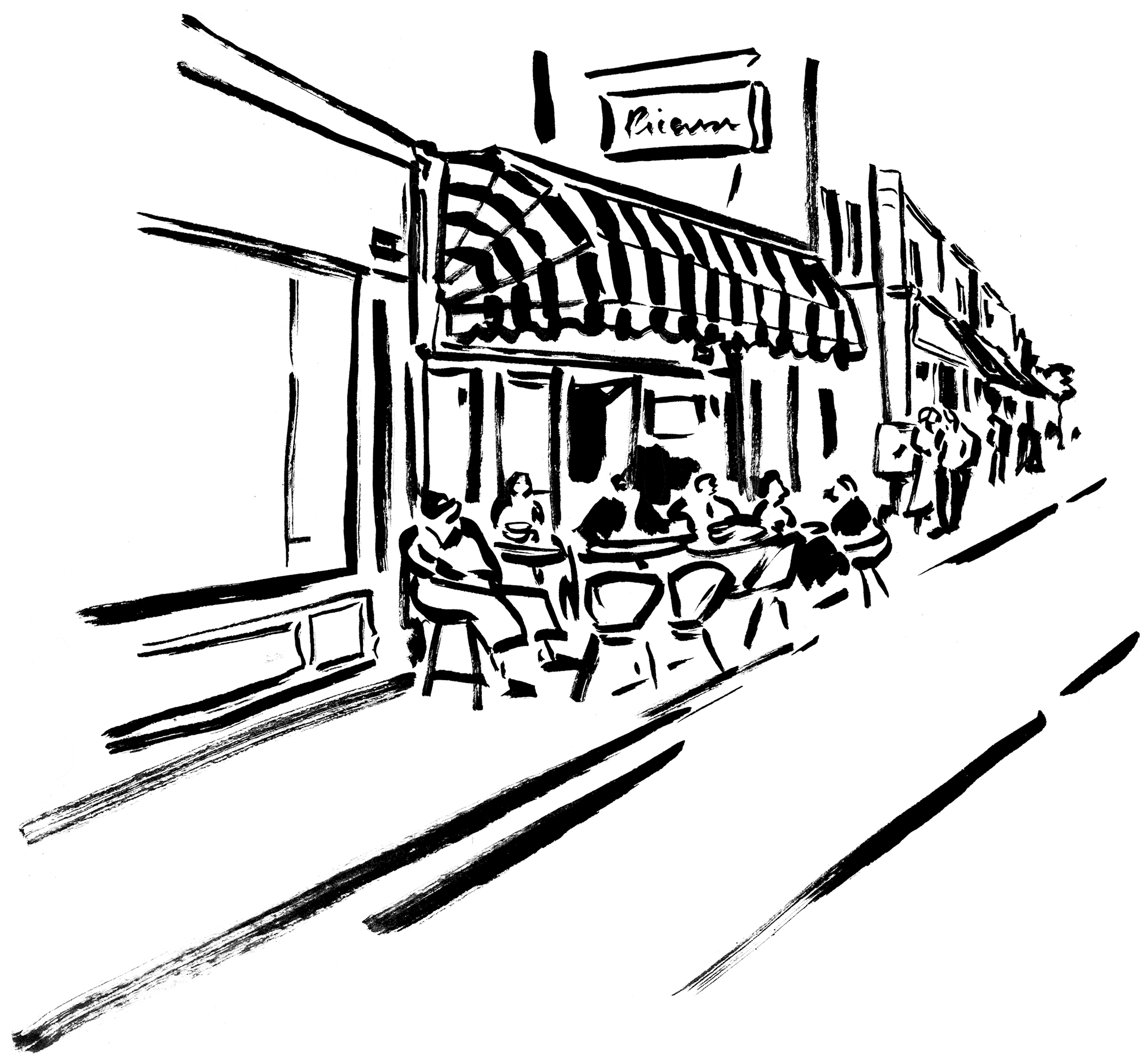
Enter Tony Mackintosh, whose grandmother invented toffee, and Tchaik Chassay, an architect with an immaculate contact book. These two brought a Notting Hill sense of haute bohemianism to proceedings. Alongside wine merchant John Armit, they fronted £450,000 to buy a fading Italian restaurant on Dean Street by the name of Gennaro’s. They also brought in founding members such as Julie Christie, Steve Martin, Salman Rushdie and Janet Street-Porter, all of whom would go on to become shareholders in the club.

It wasn’t an overnight success, but after a few lean years it became a hotspot – a place where you could turn up, bump into old pals and make new friends. Legendary antics ensued, including comedian Rowland Rivron crashing down the stairs on a mountain bike. Soho’s imperial bohemianism was in its Edwardian phase: a literally legless Jeffrey Bernard would be wheeled home by staff. Daniel Farson would piss on the bar. Francis Bacon was a member.

A decade later, a new generation of artists propelled Groucho to new heights, ushering in an era of gleaming celebrity and coke-fuelled bacchanalia. It was cool at the very moment that Britain seemed to be remaking itself, shrugging off the fusty old past and embracing a slick new world. Tom Hodgkinson, the editor of The Idler, was a member from 1996, and has ‘fond memories of being in the cubicles with Alex James, and I also remember my friend Zodiac Mindwarp, who was a heavily tattooed heavy metal singer, getting into an argument with Naomi Wolf, who walked off in a huff’.

These were the days when Wayne Sleep left the lunch bill for Princess Diana; when Toby Young – now Baron Young of Acton – would crow about (almost) having sex with a Princess Diana impersonator in the bogs. Bono and Bill Clinton would walk in together and everyone would join in for a singalong on the Peter Blake-spangled piano. Keith Allen, inevitably, was always there.

The period from 1999 to 2001 marked a volta in the club’s fortunes. Two youngish chocolate heirs, both Eton-educated, vied to buy out the original shareholders and take the brand global. Benjy Fry lost out to Joel Cadbury, backed by PR mastermind Matthew Freud, who was then stepping out with, and would later marry, the biggest media prize of all: Rupert Murdoch’s daughter.

Mick Pilsworth, a TV producer and member for more than 30 years, remembers these three years as a key moment, as ‘two spoilt brats’ brayed it out for control of the club. Peter York, another lifelong member and the co-author of The Official Sloane Ranger Handbook, said that from then on, ‘we all became resigned to it becoming a rich man’s token’.


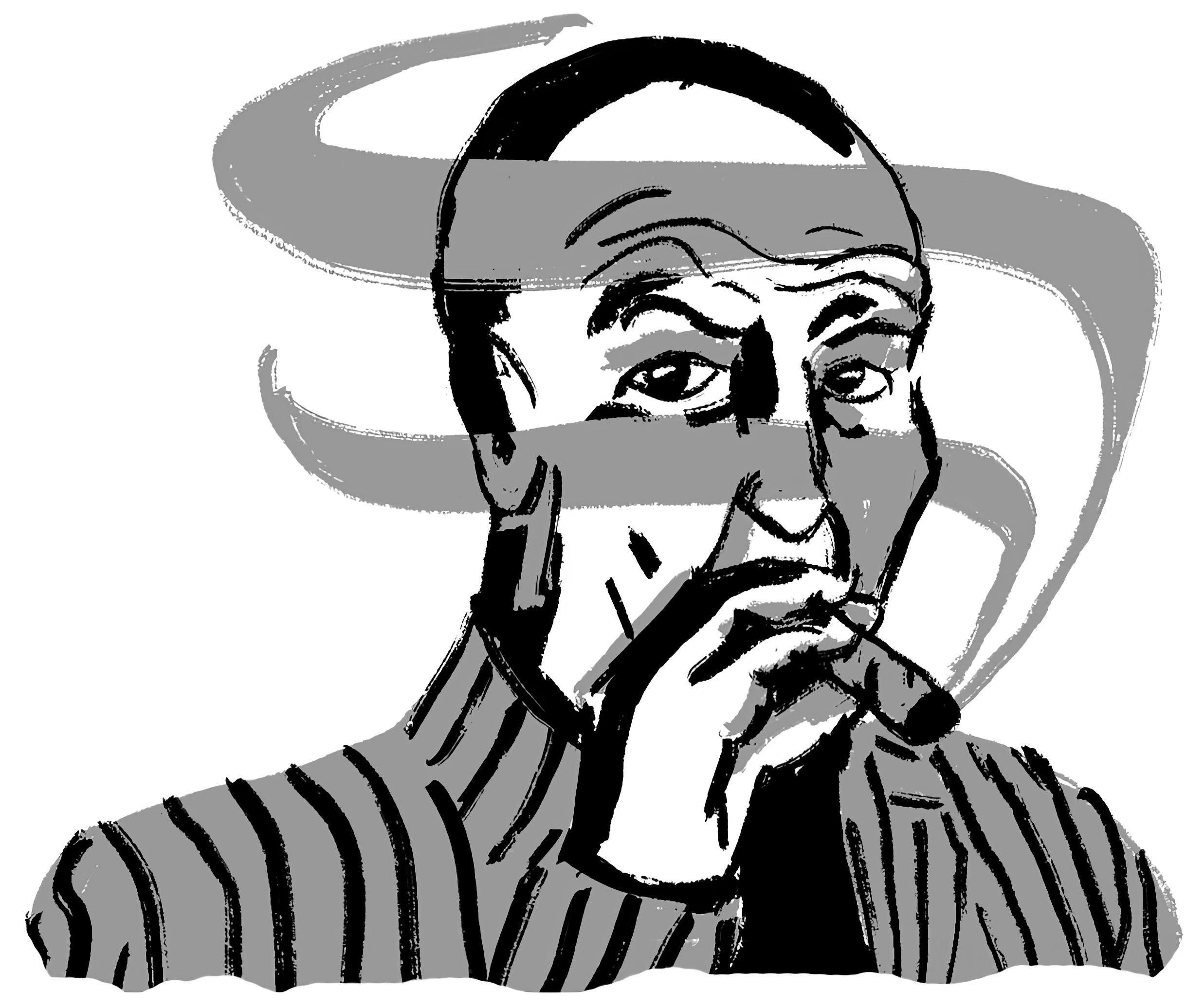
Even though the club was both busy and profitable, all was not entirely well: the Groucho’s problems ran deeper than even the best PR could fix. A former staffer, who we’ll call Kylie*, recalled that behind the scenes, ‘there was a lot of cocaine. Like, a ridiculous amount of cocaine making the rounds. I realised that even 80-year-olds are on packet sometimes.’ Despite ‘no drugs’ being one of the ‘four rules’ devised by founding member Stephen Fry, cocaine was becoming one of the defining features of the club. The upstairs snooker room became known as ‘the Peruvian Procurement Department’. A fixture of the decadence was the living – and pint-sized – embodiment of the club itself: Bernie Katz, the mobster’s son and nightlife legend.

Katz was a beloved figure who had a tricky start in life. He found his father murdered by gangland rivals when he was just 17 (or possibly 15 – Bernie was equivocal on his age). Katz Senior’s brains were still smeared over the stucco of their Gypsy Hill home when he trotted over to the wardrobe and claimed the pair of alligator-skin shoes he ‘had always had his eye on’. A combination of outrageousness, campery, ruthlessness and brio made Katz, in the words of Fry, ‘Prince of Soho’. He was known to go to extraordinary lengths to please members, once being caught administering what was referred as ‘restorative fellatio’ to a passed-out rock star in a Groucho back room. He was the man who had the balls to eject Madonna from the club for being rude. Richard Bacon referred to him as ‘Mr Anything’, because he could, via his little black book, procure anything his members wanted.

However, what they mostly wanted was cocaine. Katz’s involvement with drug procurement eventually brought him into contact with figures even more dubious than the Groucho’s usual clientele. Things began to unravel, towards the end of his tenure, it was said that Katz had pawned off some of the best art from his collection after running afoul of the Albanian mafia. He was ‘retired’ with a curt statement from the club in early 2017. Katz’s absence is conspicuous – ‘I’d say at this stage in its history, dear Bernie is the club. Which says a lot about what it was all about,’ says writer Kate Spicer. A few months later, he was dead. The death was ruled a suicide, but Mark Edmonds – the Sunday Times journalist who at the time was investigating Katz’s life – reckoned something much darker had occurred at the end of Bernie’s life and career. But when Edmonds died of cancer in 2024, the trail went cold.


Iwan and Manuela Wirth are a Swiss couple living mainly in Somerset who, in a couple of decades, built up the Hauser & Wirth gallery empire into one of the most lauded names in the art world. But they had an eye on hospitality. In 2016, they bought up The Fife Arms hotel, where a night for one begins around £900, adding local landmark Braemar Kirk to its premises. Most recently, they have opened a hotel in the Swiss Alps – Chesa Marchetta – taking over a site in the town of Sils Maria, the serene mountain village famous for hosting the likes of Richter, Basquiat and Bowie. In 2022, they bought The Groucho Club for a cool £40 million.

As well as generating their own cash flow, high-end hotels and eateries adorned with the duo’s collection can act as covert showrooms. It’s a well-known move in the art world. As one high-flyer puts it to us, ‘most of the major dealers have private dining rooms associated with their galleries where delicious food and wine is served. Entertaining is a major part of selling and promotion.’ Their purchase of the Groucho is part of a wider strategy rather than an aberration.

As sensible as this move might be, it still doesn’t explain why H&W wants to keep the Groucho cool. The bohemian chaos, late-night parties and previous reputation for a democratic access to drugs do not gel with a global mega-gallery’s business strategy. It seems that for H&W, the appeal of the Groucho is somewhat a consequence of nostalgia. The club trades on its wild past while sidestepping the risk it once courted. Indeed, if Artfarm’s previous pattern of acquisition is anything to go by, it’s conceivable that the Groucho will be made into a legacy hotel, keeping the name but making a decisive break from its sordid past.

In 2021, Ewan Venters, previously of Fortnum & Mason fame, was made CEO of Artfarm, having been a member of the Groucho for decades. The club was apparently Venters’ ‘pet project’, according to Andrew*, a former front-of-house staff member. Putting Venters in charge was a uniquely bad call, he says. ‘He had a very corporate approach to hospitality,’ one that presumably aligned with the Artfarm strategy, but, he says, was not appreciated by members or staff.

It was a stark contrast to Agnieszka Sikorska’s tenure as club manager. Sikorska, known to those close to her as Aga, had been there for almost two decades, starting as a cleaner. Not from the UK, she didn’t recognise any of the celebrities, something Andrew said they found to be ‘particularly refreshing’. Like Katz, ‘she didn’t care who was in front of her, service had to be top-tier for everybody who walked through those doors.’ Some former staff believe she was edged out by the new management. When she left, so did her no-nonsense approach to the door. When Fry was brought in to meet the senior management team in late 2022, they apparently gave him extensive VIP treatment, which he did not appreciate.

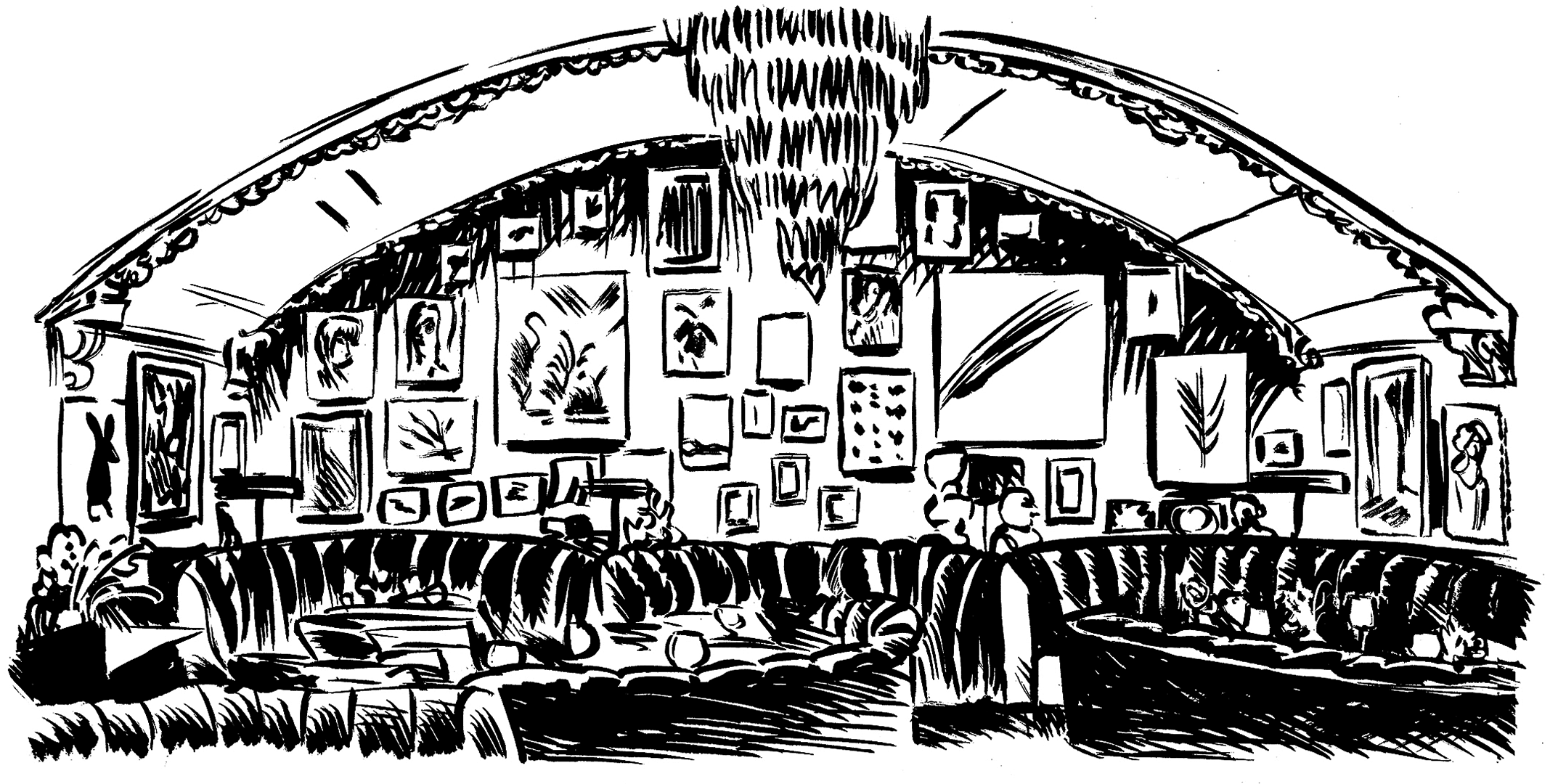
With Aga and other staff members gone, the Groucho began its slow, reputational decline, with publications across Fleet Street celebrating its demise. Members’ clubs differ from the majority of the hospitality business, where customers’ relationships to the staff are largely incidental, often fleeting. A club manager, a waiter, a bartender – they should, ideally, feel almost like a friend, or maybe even a confidant. In the new Groucho, members increasingly felt like they were in a ‘restaurant with a guest list’, as one former member put it.

The Groucho reached its lowest point in late 2024. Ella*, a former front-of-house staff member, arrived for her shift and was greeted by a police notice on the door: the Groucho was being shut down. No one had answers. They either knew nothing, or had been instructed not to speak to anyone. The night the Groucho closed, senior management all went to The Devonshire.

It was only later, when Ella checked the news on her phone, that she found out what had happened: a 34-year-old man from Hertfordshire had been arrested on suspicion of having raped someone at the Groucho.

Venters resigned, as did the Groucho’s CEO Elli Jafari, who was only ten months into the job. She had begun her tenure by burning sage throughout the building to ‘cleanse’ it of malign energies – an evidently necessary but seemingly useless effort.

Between the media fusillade and the council scrutiny, the Groucho spent months under siege. Association with the club – not only being seen there, but paying around £1,500 annually for the privilege – became not just uncool but, for some, unconscionable.

The Groucho reopened in January 2025. Four months later, charges were brought against then Tory MP Patrick Spencer for the alleged sexual assault of two women in the club in 2023. He has pleaded not guilty, and his trial is set for July 2026. Police said the allegations against Spencer were not linked to the closure of the Groucho in December 2024 following a licensing review in the wake of the alleged rape. The Met said that the man suspected of rape ‘remains released under investigation’.


Since a licensing review probe, the Groucho has strictly implemented their no-drugs policy. As part of a Westminster City Council diktat, CCTV constantly monitors bathrooms, and security hunt down members who enter stalls in pairs.

For the Groucho to emerge from the miasma of its seedy past with its reputation intact, it must both maintain its safeguards and keep drawing in the right crowd. The Groucho took off because it attracted people who were, or would become, big: big artists, big musicians, big media personalities. It was buoyed by that air of glamour, excitement, mystique.

In addition to dwindling membership, the advancing age of its patrons poses problems. For Kylie, the club’s reputation has suffered as the lifers have degenerated into ‘these annoying, horrible men’. Though they would’ve been perfectly behaved back in the day, ‘they have a midlife crisis, and now that’s what the Groucho looks like, because they haven’t successfully attracted clever people, which is something they were really trying to do.’ The presenter Sydney Lima recalls the evening a dinner party was held where the guests comprised ‘cancelled TV presenters’. Another partygoer conjured the memory of Benjamin Butterworth, Twitter fabulist and GB News presenter, holding a private event at the Groucho in 2023. The club – once a lodestar for a meritocratic Albion promised by New Labour – has become decidedly Tory in energy.


But the Groucho’s most cumbersome issue is that it’s so out of touch with the outside world, and that’s no longer just by design. Just as cocaine use became increasingly normalised across the country – openly snorted in pubs and football grounds – an honest toot at the Groucho, British High Society’s Gakky Ground Zero, became an effective impossibility. Conversely, the other strands of bad behaviour that made the Groucho iconic have now become distasteful at best, taboo at worst.

And it is no longer the only show in town. Private members’ clubs have proliferated all over the capital. More have opened in the past four years than in the three decades since 1985. Hip things can groove the night away while hoping to bump into Dua Lipa at the House of koko in Camden. For young ‘creatives’, membership at SET Social in Peckham is just £12 a year. Media types drink and dine well at the Union Club, a rickety townhouse on Greek Street. Billionaires, Brexiteers and boldface celebrities mingle at 5 Hertford Street in Mayfair. For those in their later years, the Chelsea Arts Club functions as a sort of Best Exotic Marigold Hotel for badly behaved bohemians. Soho House – set up for people who couldn’t get into the Groucho – is now a multi-billion-dollar brand. And of course, the burgundy-lipped old boys are still very much in situ in their Pall Mall palazzos.

So who is the Groucho for? Maybe no one. Maybe it should bow out, leaving us to enjoy its ironic legacy as the club that was named for the Groucho Marx quote, ‘I refuse to join any club that would have me as a member’, and yet still became, for a period of decades, the most desirable hangout in the land.

The people who made the Groucho special have either died, cleaned up their act or have one well-shod foot in the grave. Millennial members have left in droves. The possibility remains that Artfarm may turn it into a hotel, maintaining the fantastic art collection as a sort of heritage experience with bed and board. Perhaps they will shape up the nightlife aspect for the Gen Z crowd, and help the Groucho phoenix its way to its 50th anniversary, once more the coolest place in town.

But another former member is unequivocal: ‘It needs to be shut down. It is cursed.’


*Names have been changed

You've reached the end. Boo!

Don't panic. You can get full digital access for as little as £24.99 per year.

Get Offer

Register for free to continue reading.

Or get full access for as little as £24.99 per year.

Register Subscribe

Already a member? Sign In