Skip to content
Home
Investigations

The Graveyardof Empires

Cormac Kehoe went shopping for a souvenir.

16 July 2026
Text size
Share
Issue 28 cover
Issue 28£7.99 View issue →

Anyone who has traversed Britain’s cities over the past two decades will recognise the American candy stores and souvenir shops that have spread across the country like Japanese knotweed. The stores, radiating surgical-grade light from their empty interiors, imbue places like the West End with an uncanny quality. Everything about these establishments seems designed to repel customers. So what exactly has led to the proliferation of these shops? Over the past few years, stellar reporting from London Centric and Private Eye has shone a light on some of the misdoings of the ‘dodgy shops’ but until now, no one has given a full, up to date account of their rise, or uncovered the main actors involved. The answer, it turns out, lies in Afghanistan, the graveyard of empires.

Two months after two planes hit the World Trade Center on 11 September 2001, George Bush sent American troops to oust the ruling Taliban. America claimed to be transforming one of the world’s poorest countries into a democracy. But the Hamid Karzai regime that took over in the resulting power vacuum would instead bring about the return of the corrupt warlord class that had dominated Afghanistan before the Taliban’s accession in 1996. Western powers flooded billions of pounds of aid into this new Afghanistan, much of which was siphoned off by the reemergent warlords. A 2009 calculation of these losses estimated that $3.65 billion was leaving the country every year via Kabul airport. In time, this cascade of corruption would completely undermine the fledgling state.

However, our investigation indicates that some of the aid money which left Afghanistan over the peaks of the Hindu Kush would eventually return to the UK, finding an unlikely safe haven on the streets of London – in a company called LaModa UK Limited. The company was formed on 6 June 2006 by three young Afghan businessmen. In its first year, LaModa took out a lease in Bayswater, and another three in the Trocadero Centre, which had just been taken over by Asif Aziz, who was beginning to build a sprawling property empire.

They then leased another unit at 35 Whitehall, and another at 21a Buckingham Palace Road. Those in the legitimate gift shop trade at the time told The Fence that those behind LaModa and their network controlled approximately 100 shops (one of the businessmen behind the shops claims it was closer to ten) by the end of 2019.

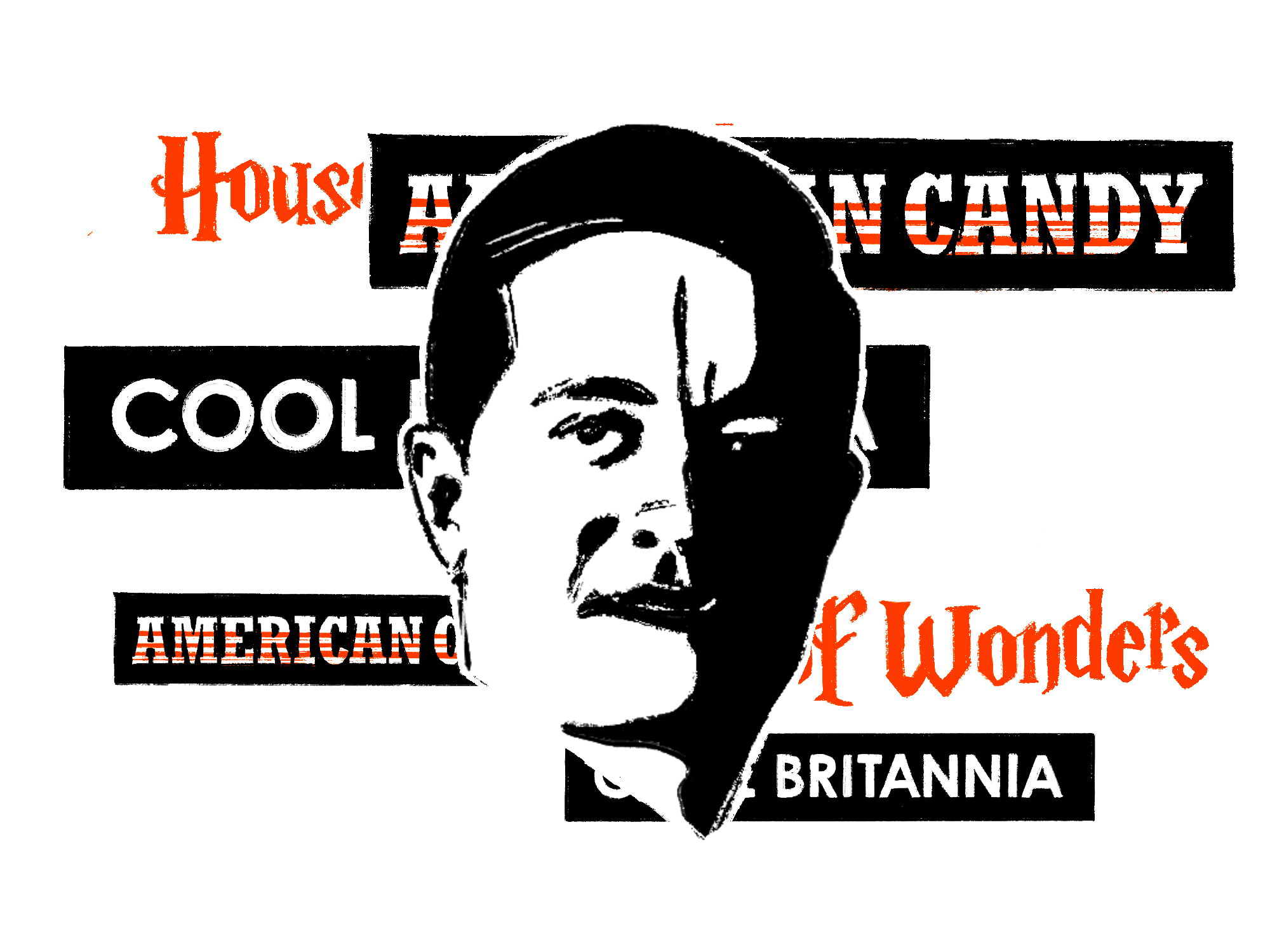
Commercial documents obtained by The Fence show that the group were using a process known as ‘phoenixing’, where companies are repeatedly liquidated and set up under new names, to avoid payment of tax and other debts. Our analysis shows the group leaving thousands in unpaid business rate bills at multiple addresses across central London, including at addresses in the Criterion building and one for £325,000 at House of Secrets, an unofficial ‘Harry Potter’ shop on 146– 148 Oxford Street. With remarkable speed, LaModa transformed shops on high streets. After they moved into 21a Buckingham Palace, it became a Palace Gift Store, then a Palace Gifts and, the last time I checked, a depressing blackand-gold-fronted unofficial Harry Potter shop called House of Wonders.
The shops, particularly in the beginning, appeared to have few customers, so their rapid proliferation made no sense. Where was the money coming from? A recording obtained by The Fence, which involves a senior member of the network, indicates that the shops were being used as a launderette for aid money flowing out of Karzai-controlled Afghanistan.

‘UK government ends up better off,’ one Afghan souvenir man remarked to the source who shared the tape with The Fence, ‘development aid goes in [to Afghanistan], and even more comes back.’ This is not how it’s supposed to work. While most other governments had managed to block illicitly commandeered aid money returning from Afghanistan, Britain let it flow through its doors. This, the souvenir man concludes, shows that ‘England is smart.’ Assertions made to The Fence by two sources in the pre-Taliban government supported his claim. His explanation was further strengthened by the fact that multiple members of the group are connected to senior figures in the regime under which billions went missing.

Behind LaModa, the commercial core of a web of companies that controlled gift shops across the country were three Afghan businessmen: Ghulam Sarwar Afzaly (who has now changed his name to Sarwar Nabizoda), his relation Mohammed Jan Sakizadeh and Nasar Mirwais. Our investigation has found a series of connections between members of this core group and their associates with the deposed regime of Hamid Karzai, and the new opposition led by Ahmad Massoud. The most obvious connection was through Ghulam Sarwar Afzaly, who multiple Afghan government sources said had been an ally of Afghanistan’s former Minister of Foreign Affairs, Abdullah Abdullah. Afzaly claims he does ‘not know him personally’, but our research found that he continues to retain ties to some of Abdullah’s closest allies while the latter was in government.
There were plenty of other links between the Karzai regime and the wider Afghan network behind the illicit souvenir shops. Hafizullah Shakir, who previously worked for the Afghan government in Abu Dhabi and at the United Nations in Kabul, supplied goods to the shops. Shakir appears in several social media photos alongside Karzai, one as recently as 2016, when he visited London. Another constituent part of the Afghan operation, Historical London, was founded by LaModa’s Afzaly and Mirwais, alongside a man named Hamayon Hasani, who would go on to be appointed director of 14 souvenir and sweet companies. Hasani’s old LinkedIn profile displays a photo of him reclining on a couch with Panjshir Province police chief, Mohammad Ishaq Tamken. They are holding hands and smiling.

Afzaly is curiously well placed in political circles. He has ties to the anti-Taliban opposition, for instance. Our investigation found that he is an associate of Ahmad Massoud, who is the leader of the National Resistance Front, now the main body of opposition to the Taliban. In April 2023, when Massoud went to the Austrian Parliament for a discussion about the US-backed Vienna Process (now the main forum for opposition to the Taliban), he brought Afzaly along as part of his delegation. Afzaly has also managed to cultivate political influence in Britain as well, taking a seat as an advisory board member at the Mosaic Foundation Afghanistan in its early days. Mosaic was set up by Zalmai Nishat, who was a senior adviser in the Afghan government, with the intention of advocating for human rights in Afghanistan. The foundation has partnered with the Bush Foundation, and in December 2024, it co-hosted a Parliamentary roundtable event at the House of Lords alongside the Tony Blair Institute for Global Change. Afzaly sat at the back, among the members, lords and former Afghan ministers.

As the 2010s progressed, LaModa became a mere holding company for an expansive web of related companies involved in the illicit Afghan souvenir network. These companies would take over leases all over the capital and on Salisbury High Street in Wiltshire, King’s Parade Cambridge, on Henley Street in Stratford-upon-Avon, in the Abbey Churchyard in Bath, several in Oxford on Broad Street, as well as two on Cornmarket Street. Central to this expanding web was Cool Britannia Retail, the main gift shop brand associated with the network, which would come to feature prominently on British high streets. In 2009, its first year of trading, Cool Britannia turned over almost £10 million and took on 106 employees.

This ballooning success was propped up by tax avoidance, giving it a major advantage over its legitimate rivals in the souvenir trade. On top of the aforementioned unpaid business rate bills, The Fence has also seen multiple invoices signed by the group that failed to charge VAT on their transactions. Reporting from Private Eye in 2019 detailed how the network running the gift shops also took over the wholesale business, and began supplying their own stores with merchandise in an arrangement described as a ‘VAT-free service’. Their strange supply arrangements are made clear in the gift shop companies’ accounts. In 2011, auditors issued a qualified opinion for the booming business because ‘they could not observe the stock count,’ adding that ‘the reliability of the £1.58 million stock figure is uncertain.’ Stock was the company’s largest asset and drove a large part of gross profit, so this was a blazing red flag. In 2014, the same problem reemerged, this time for an amount approaching £3.5 million. The following year, the pattern continued, and the year after that, the company simply opted for unaudited accounts.

All this business has been good for the trio at the centre of the illicit gift shop network. Nasar Mirwais bought a huge house in Golders Green, and Afzalya a £1.3 million flat in Fulham and another near-million-pound home in New Malden. But our analysis of property filings, undertaken alongside Transparency International, shows that it was not until Afzaly founded Eton Holdings Limited that the network really started buying up property across the country.

Eton Holdings Limited’s buying spree began in October 2019 when it purchased a £2 million freehold property across the road from Canterbury Cathedral, the spiritual centre of the Church of England. The company went onto spend £2.15 million pound on 34 Museum Street, across the road from the British Museum, and over £2 million on Scottish real estate, taking over two properties on Rose Street in Edinburgh, one in Inveraray, another in Ullapool and two in Pitlochry.

Eton Holdings’ move into the property market was, in part, funded by money taken directly from the gift shops and Afzaly himself. In 2020, Afzaly sent a personal loan of £745,000 to the company.

By November 2024, Cool Britannia had directly lent Eton Holdings £843,443. Some of Eton Holding’s other funding is more difficult to map, with the company also receiving £1,891,456 from unknown sources listed as ‘other creditors’ in their accounts. Eton Holdings, now the most active company in the gift shop web, also continued to cannibalise leases at prime locations: 144 Portobello Road and another unit on Buckingham Palace Road, which is now the inventively named Buckingham Palace Shop.

The group’s wealth is mounting, and its near-empty shops continue to emerge across the country. Other groups follow suit in their droves, replicating a model that has been 20 years in the making. When polling companies asked the alienated voters of Makerfield what their prospective MP should prioritise once in office, one of the most common issues they raised was the declining state of the high street. Of all the myriad crises facing the government, tackling the spread of these networks of sweet shops, vape shops and souvenir shops has to be the easiest to fix. The government, however, has yet to even try the most obvious route: sanctioning the landlords and leaseholders, allowing the networks to thrive. Their inaction shows that this is not a matter of political wit, but of political will.

In response to the findings of our investigation, Ghulam Sarwar Afzaly told The Fence, ‘I deny, in the strongest terms, any suggestion that either I, or my companies, have been responsible for any wrongdoing. In particular, the suggestions that I have engaged in VAT and business rate evasion, laundered western aid money and engaged in the practice of “phoenixing” are all completely untrue.’

This article is on us — register free to keep reading.

Cormac Kehoe

Cormac Kehoe is a journalist who writes features and investigations for the Fence.

Related